
Customer Reviews For The USI Electric Battery-Operated Ionization Smoke and Fire Alarm (USI-1227L)

Overall Rating
Product Reviews
It is the battery version but it fits the existing bracket of my old USI-1208 wired version.
Great product. Customer support outstanding.
Like the product thank you
Bought these to replace my 10 year old detectors of the same brand. They fit perfectly into the older units mounting brackets and save me that much more time on the installation...just pop in the battery and twist on the unit.
So glad to find an identical unit to our old one. Thank You.
just perfect and easy to get it done.
Product FAQs
The smoke alarm chirps to indicate a "low battery" condition, meaning the battery needs to be replaced. Battery powered smoke alarms will chirp a minimum of 30 days before the battery completely loses power.
AC powered smoke alarms with battery backup will chirp indefinitely assuming AC power is present; if battery power is low, or battery is removed; until a fresh battery is installed. Approved replacement batteries are listed on the back of each smoke alarm and in the user's manual.
Certain model smoke alarms with a silence button (designed to silence the alarm during a nuisance alarm) may chirp to indicate the smoke alarm is in the silence mode. The chirp will stop after approximately 8 minutes and the smoke alarm will return to its normal operation.
The flashing red light gives a visual indication that the smoke detector is functioning properly. It also indicates a working battery is connected to the smoke alarm.
When a green light is present on your smoke detector, it means that AC power is currently operating the alarm.
If the green light on your smoke detector is not on, it means the AC power has been interrupted to the alarm. Check the circuit breaker and AC wiring to make sure power is still reaching the smoke alarm.
When interconnected alarms are alarming, the smoke alarm which initiated the alarm, either by test button or sensing smoke, will flash the red LED light approximately once per second. The red LED light on the other non-initiated interconnected smoke detectors will not be lit but will sound the alarm.
The NFPA 72 standard states the interconnect limit is 12 smoke alarms and up to 6 other alarms (heat alarms or carbon monoxide detectors) for a total of 18 total alarms. With 18 alarms interconnected, up to an additional 6 relay modules may be interconnected (for a maximum of 24 devices).
If battery backup alarms and non-battery backup alarms and accessories are mixed in an interconnect system, all devices without battery backup WILL NOT operate during an AC power failure.
CAUTION: USI alarms and accessories should only be interconnected with other USI alarms and accessories. Connecting devices from another manufacturer to USI devices may result in nuisance alarms, failure to alarm, or damage to one or all of the devices in the interconnect system. All interconnected USI alarms should be powered by the same fuse or circuit breaker. Smoke alarms shall not receive their power from a circuit that is protected by a ground fault circuit interrupter. Improper connection will result in damage to the alarm, failure to operate, or a shock hazard.
USI-1227L Video Guide
Watch this helpful video to learn more about the USI Electric Battery-Operated Ionization Smoke and Fire Alarm (USI-1227L).
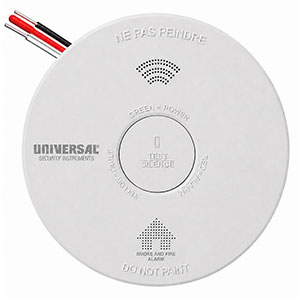

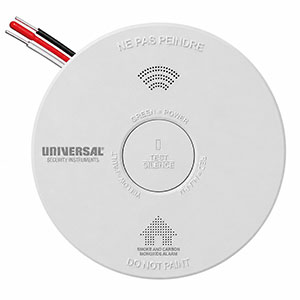


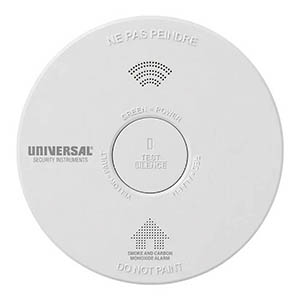
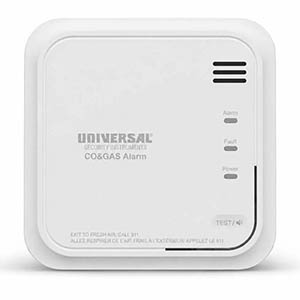
Read customer ratings and reviews for the USI Electric Battery-Operated Ionization Smoke and Fire Alarm (USI-1227L). Learn what other customers have to say about their experiences, including what they liked, how the USI Electric Battery-Operated Ionization Smoke and Fire Alarm (USI-1227L) met their expectations, and any concerns they encountered. These firsthand perspectives can provide helpful information beyond the standard product description.
Browse the reviews to compare customer ratings, explore positive and critical feedback, and make a more informed purchasing decision. If you've purchased or used this product, we encourage you to share your experience and help other shoppers find the right product for their needs.