Smoke Alarm Troubleshooting
Browse USI smoke alarm troubleshooting guides for chirping, warning sounds, LED lights, battery changes, power issues, testing, cleaning, and replacement.
Related Topics:

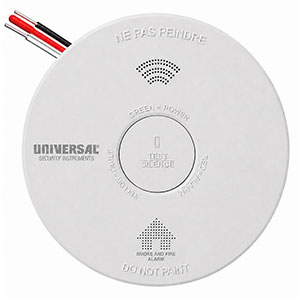

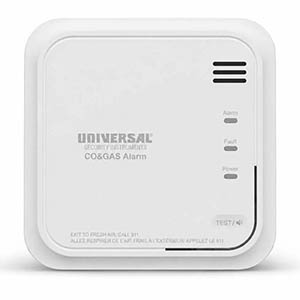


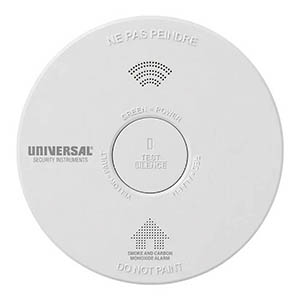

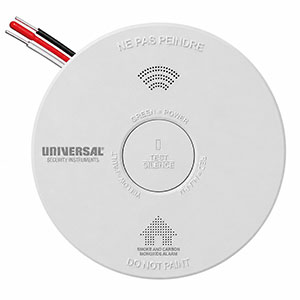
Is your Universal Security Instruments (USI) hardwired smoke alarm not working, displaying no green power light, or failing to sound when tested? Hardwired smoke detectors rely on your home's electrical system, and many models include a backup battery to maintain protection during a power outage.
When a hardwired smoke alarm stops working, the problem may involve interrupted AC power, a tripped circuit breaker, an improperly connected wiring harness, a backup battery issue, or an alarm that has reached the end of its service life.
This troubleshooting guide explains common USI hardwired smoke detector problems, how to identify the cause, and when to contact an electrician or replace the alarm.
If your smoke alarm is sounding an emergency warning: Evacuate immediately and call 911 from outside. Never assume that a sounding alarm is caused by an electrical malfunction.
If your smoke alarm is not working: Restore fire protection as soon as possible. If repairs cannot be completed promptly, arrange for appropriate temporary smoke alarm protection while the problem is resolved.
Electrical safety: Never touch exposed wiring or attempt electrical repairs while a circuit is energized. A qualified electrician should inspect wiring connections, electrical boxes, and other hardwired components.
The following chart identifies some of the most common symptoms associated with hardwired smoke detectors and the steps you can take to determine what may be wrong.
| Problem | Possible Cause | Recommended Action |
|---|---|---|
| Green Power Light Is Off | Interrupted AC power, tripped breaker, or electrical connection issue. | Check the circuit breaker and power status. Have the wiring inspected if power is not restored. |
| Smoke Alarm Will Not Sound During Testing | Loss of power, backup battery problem, improper activation, or alarm malfunction. | Follow the model-specific testing procedure and check applicable power and battery requirements. |
| Hardwired Alarm Keeps Chirping | Low backup battery, sensor fault, or end-of-service-life warning. | Identify the chirp pattern and consult the alarm's troubleshooting guide. |
| Alarm Stopped Working After Power Outage | AC power has not returned, backup power is unavailable, or the alarm has developed a fault. | Check the electrical supply, backup battery requirements, and test function. |
| Interconnected Alarms Do Not Sound Together | Incompatible alarms, improper interconnect wiring, or an electrical connection issue. | Verify model compatibility and have the interconnect wiring inspected. |
| New Hardwired Alarm Is Not Working | Installation issue, inactive battery backup, loose connector, or missing AC power. | Review the installation instructions and have the electrical connections checked. |
| Alarm Displays a Fault or End-of-Life Warning | Sensor malfunction or expired alarm. | Replace the unit when required by the manufacturer. |
On many Universal Security Instruments hardwired smoke alarms, a continuously illuminated green LED indicates that the alarm is receiving AC electrical power.
If the green light is normally illuminated but has suddenly turned off, the smoke detector may no longer be receiving power from your home's electrical system.
A tripped circuit breaker or an interrupted electrical circuit can prevent your hardwired smoke alarm from receiving AC power.
If multiple hardwired smoke alarms have lost their green power indicators simultaneously, a shared electrical supply problem may be responsible.
Many USI hardwired smoke detectors use an AC quick connector that attaches the alarm to the wiring harness inside the electrical junction box.
If the connector is loose, damaged, or improperly installed, the smoke detector may not receive electrical power even when the circuit is active.
For example, the USI/SM/HWREP installation guide specifies that its AC connector must be fully secured and that the green LED should illuminate after power is restored.
Because the connector is part of the household electrical installation, have a qualified electrician inspect it if you suspect a connection problem. Electrical power must be disconnected and verified off before the connector or wiring is handled.
If the circuit breaker appears normal and the green power indicator remains off, there may be another issue affecting the electrical supply.
Possible causes include:
Hardwired smoke alarms generally require a continuous electrical supply in accordance with their installation instructions and applicable electrical codes. An electrician can determine whether the correct power is reaching the alarm.
Some hardwired USI smoke alarms continue operating on battery backup when AC power is interrupted. However, backup operation depends on the model and condition of its battery. Never assume that the alarm is providing protection simply because a battery is installed. Confirm the alarm's operating status and restore AC power promptly.
If your USI hardwired smoke alarm does not sound when you press the TEST button, the alarm may not be receiving power or may have an installation, battery, or equipment problem.
A smoke detector that fails its required test should not be relied upon for fire protection until the problem has been corrected.
USI smoke alarms have model-specific testing instructions. Some require the TEST or TEST/SILENCE button to be pressed and held until the alarm sounds.
Check whether the alarm's normal AC power indicator is illuminated. On many USI hardwired models, this is a steady green LED.
If the indicator is off when AC power should be present, check the circuit breaker and have any unresolved electrical issue inspected by a qualified electrician.
Many hardwired USI alarms include a replaceable or sealed backup battery. If your smoke detector requires a replaceable backup battery, verify that it is properly installed and meets the manufacturer's specifications.
For example, the USI/SM/HWREP uses a replaceable 9-volt carbon-zinc backup battery, while the USI/SM/HW10YR/P uses a non-replaceable lithium backup battery that activates during installation.
If the appropriate power and battery requirements have been verified and the alarm still does not respond to the manufacturer's testing procedure, the unit may be defective or have reached the end of its service life.
Follow the manufacturer troubleshooting instructions. Replace the alarm if it remains unresponsive or the manual identifies a fault requiring replacement.
Hardwired smoke alarms receive their primary power from your home's electrical system. Many models include battery backup that allows the alarm to continue providing protection during a power failure.
If your alarm stopped operating during or after a power outage, consider the following:
Once power has returned, verify the normal AC indicator and perform the manufacturer-recommended alarm test.
Many USI hardwired smoke alarms include battery backup, allowing them to operate during an electrical power outage. However, this feature depends on the specific model, a properly installed or activated battery, and the battery's remaining capacity.
Not all hardwired alarms have battery backup. Check your model's specifications and restore the AC electrical supply as soon as possible. Do not rely on battery backup as a permanent substitute for the required hardwired connection.
Interconnected smoke alarms are designed so that when one compatible alarm detects smoke, the other alarms in the system also sound a warning.
If one smoke alarm activates but the others remain silent, there may be an issue with compatibility, electrical connections, or the interconnect circuit.
USI warns that connecting incompatible smoke alarms or mixing manufacturers in an interconnected system can result in nuisance alarms, failure to sound, or equipment damage.
Before replacing or adding a smoke detector, verify that the selected model is approved for use with the existing interconnected alarm system.
Hardwired interconnected alarms use a dedicated signaling connection to communicate with other compatible alarms.
Interconnect wire colors and connector designs may differ between USI product generations. Never assume that a replacement alarm is electrically compatible simply because its connector appears similar.
If an alarm is not communicating with the rest of the system, have a qualified electrician verify the interconnect wiring, electrical supply, and installation requirements.
Follow the manufacturer's test procedure to confirm that compatible interconnected alarms respond correctly.
If one or more units fail to sound during the required interconnection test, the system may not be providing the intended level of protection. Have the problem corrected promptly.
Universal Security Instruments offers several hardwired smoke and combination alarm models. The following examples highlight manufacturer-documented power indicators and troubleshooting considerations.
| USI Model | Power / Operating Indicator | Troubleshooting Consideration |
|---|---|---|
| USI-5304 | Green LED indicates AC electrical power. | If the green light goes out, check the electrical supply and have unresolved wiring problems inspected. |
| USI/SM/HWREP | Green LED illuminates when AC power is present. | Check power and connector installation if the LED is off. Verify the approved backup battery if testing fails. |
| USI/SM/HW10YR | Steady green LED indicates AC power; red LED flashes periodically in standby. | If the green LED is off, investigate the AC electrical supply and verify proper backup battery activation. |
| USI/SM/HW10YR/P | Green LED indicates AC power. | A missing green LED may indicate no AC power. Failure to respond during testing may require replacement. |
| USI/SMCO/HWREP | Green LED glows on AC power and flashes during DC backup operation. | If the expected indicator is missing, verify the electrical supply, connector installation, and backup battery requirements. |
Note: These examples are based on specific USI product guides. Indicator patterns, backup batteries, and testing procedures may differ between models and production revisions. Always consult your alarm's user manual before performing maintenance.
A hardwired smoke alarm should be replaced if it has reached its specified service life, has developed an unresolved sensor fault, or fails to operate correctly after approved troubleshooting.
Most residential smoke alarms should be replaced after approximately 10 years, even if they continue receiving AC electrical power.
Consider replacement when:
Before purchasing a replacement, verify its mounting requirements, electrical connector, backup power configuration, and interconnect compatibility.
USI recommends testing applicable smoke alarm models weekly and after installation or battery replacement. Regular testing helps identify electrical supply problems, battery issues, and alarm malfunctions before an emergency occurs. Always follow the testing schedule and procedures in the manual for your specific model.
A hardwired smoke detector may stop working because of interrupted AC power, a tripped circuit breaker, an improperly connected wiring harness, a backup battery problem, or an internal malfunction. Check the model's expected power indicators and testing instructions. Have unresolved electrical problems inspected by a qualified electrician.
On many USI hardwired smoke alarms, a steady green LED indicates AC electrical power. If the green light is unexpectedly off, the alarm may have lost its electrical supply. Check the circuit breaker and have the wiring inspected if power is not restored. Indicator behavior varies by model.
Some hardwired USI smoke detectors can continue operating on battery backup when AC power is unavailable. However, this depends on the model and condition of its backup battery. Restore the electrical supply and verify proper operation according to the manufacturer's instructions.
An alarm that receives AC power but fails its test may have a battery activation issue, internal malfunction, or other fault. Verify that you are following the correct testing procedure and the model's battery requirements. Replace an alarm that continues to fail testing after approved troubleshooting.
If several hardwired alarms lose power simultaneously, a shared electrical circuit problem may be responsible. Check the breaker supplying the alarms. If electrical power is available but the alarms are still not functioning, contact a qualified electrician or the manufacturer's technical support team.
Interconnected alarms may fail to communicate because of incompatible models, improper interconnect wiring, or an electrical installation problem. Check the manufacturer's compatibility requirements and have the system inspected if the alarms fail the required interconnection test.
Many USI hardwired smoke detectors include a backup battery to maintain protection during a power outage. Some models use replaceable batteries, while others include sealed non-replaceable batteries. Check your alarm's specifications and follow its battery installation or activation instructions.
If your hardwired smoke alarm is receiving power but continues to chirp, displays an unexpected LED warning, or fails to operate correctly, the following resources may help you identify the problem.
If your hardwired smoke alarm has reached the end of its service life, developed an unresolved fault, or no longer responds to testing, it may be time for a replacement. Universal Security Store offers hardwired smoke alarms with battery backup and interconnected protection.

Explore related support articles and resources for this topic.
Browse USI smoke alarm troubleshooting guides for chirping, warning sounds, LED lights, battery changes, power issues, testing, cleaning, and replacement.
Contact options may differ depending on the type of help you need.