Smoke Alarm Troubleshooting
Browse USI smoke alarm troubleshooting guides for chirping, warning sounds, LED lights, battery changes, power issues, testing, cleaning, and replacement.
Related Topics:

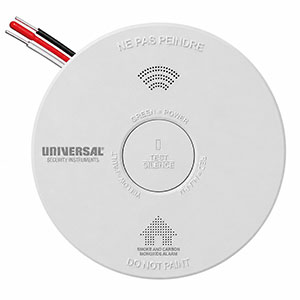
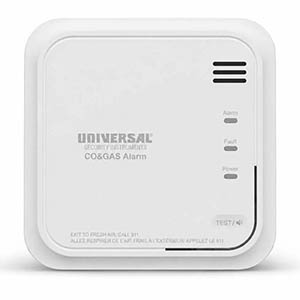


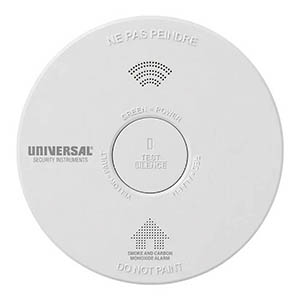


Is your Universal Security Instruments (USI) smoke alarm beeping once, twice, or three times? Different beep patterns can indicate a low battery, sensor malfunction, end-of-life warning, or a possible fire emergency. Understanding these sounds can help you identify the problem and determine what action to take.
This guide explains common USI smoke alarm beep codes, including alarms that chirp every 30 to 60 seconds, repeat three short chirps, or sound a continuous series of warning beeps. Because signals vary by model, always verify the exact pattern against your alarm's user manual.
Three loud beeps, followed by a pause, repeating continuously: This is the standard smoke/fire alarm pattern. Evacuate immediately and call 911 from outside. Do not assume it is a malfunction.
Four loud beeps, followed by a pause, repeating: On combination smoke and carbon monoxide alarms, this typically indicates a carbon monoxide emergency. Move everyone to fresh air and call 911.
Occasional short chirps separated by 30, 40, or 60 seconds: These are generally maintenance or trouble notifications, such as a weak battery, sensor problem, or end-of-service-life warning. The exact meaning depends on the model.
The following quick-reference chart covers commonly encountered smoke detector sounds. Pay close attention to the number of beeps, the length of the pause, and whether the pattern repeats continuously or only once every minute.
| Beep Pattern | Possible Meaning | Recommended Action |
|---|---|---|
| 3 loud beeps, pause, repeating | Smoke or fire alarm | Evacuate immediately and call 911 from outside. |
| 4 loud beeps, pause, repeating | Carbon monoxide warning on combination alarms | Evacuate to fresh air and call 911. |
| 1 short chirp every 30–60 seconds | Often a low battery or power-related warning; some models use a similar signal for sensor trouble. | Identify the model and check its manual. Replace batteries or follow the specified fault instructions. |
| 2 short chirps every 60 seconds | End-of-service-life warning on several USI models. | Verify the model's warning pattern and replace the alarm when end-of-life is confirmed. |
| 3 short chirps every 40–60 seconds | Sensor trouble or end-of-service-life warning, depending on model. | Consult the product manual. A fault or expired alarm may require complete replacement. |
Three loud beeps followed by a brief pause and repeated without a long interruption are different from three short chirps that occur only once every 40 or 60 seconds. The first pattern can indicate a fire emergency, while the second may indicate a maintenance issue. Never dismiss an active alarm as a maintenance warning.
A smoke detector that chirps approximately once every minute is commonly reporting a low battery. On hardwired alarms with replaceable battery backup, the chirping may continue even while the alarm receives household electrical power.
However, a single chirp does not always mean low battery. Certain USI models use a similar pattern to indicate a sensor malfunction.
On several USI smoke alarms, two short chirps approximately every 60 seconds indicate that the alarm has reached the end of its service life.
For example, the USI/SM/10YR and USI/SM/HW10YR product families use a two-chirp pattern for an end-of-life warning. This means the smoke alarm needs to be replaced, even if it appears to operate during testing.
Replacing a removable battery will not correct an expired sensing component. Check the manufacture date and the instructions for your specific alarm.
Three short chirps separated by an extended period of silence may indicate a sensor malfunction or an end-of-service-life condition.
For example, the USI/SM/HWREP troubleshooting guide identifies three chirps approximately every 40 seconds as an end-of-life warning. Some USI combination smoke and carbon monoxide alarms instead use three chirps approximately every 60 seconds to report sensor trouble.
These signals should not be confused with the continuously repeating three-beep emergency fire alarm pattern. Always consult the model-specific beep code instructions before attempting troubleshooting.
Universal Security Instruments manufactures battery-powered, hardwired, and combination alarms. Warning patterns are not identical across every product. The following examples demonstrate why identifying your model number is important.
| USI Model | Beep Pattern | Manufacturer-Identified Meaning |
|---|---|---|
| USI/SM/REP | 1 chirp every 40 seconds | Low battery |
| USI/SM/HWREP | 1 chirp every 40 seconds | Smoke sensor fault |
| USI/SM/HWREP | 3 chirps every 40 seconds | End of service life |
| USI/SM/10YR | 2 chirps every 60 seconds | End of service life |
| USI/SM/HW10YR | 2 chirps every 60 seconds | End of service life |
| USI/SMCO/10YR/V | 3 chirps every 60 seconds | Sensor trouble on this combination alarm |
Note: These are examples from specific USI troubleshooting guides, not a universal reference for every model or production revision. Your alarm may also use colored LED flashes or voice announcements to identify the warning.
To verify your alarm's signal, locate its model number and review the official USI product manuals.
If your smoke alarm is producing occasional maintenance chirps rather than an active emergency warning, follow these steps to identify the cause.
Smoke alarms generally need replacement after 10 years, or sooner if they develop an unresolved fault or reach their specified end of service life. Check the manufacture date and the model's replacement instructions. Never permanently disconnect an alarm or remove its battery simply to stop a warning sound.
Three loud beeps followed by a short pause and repeated continuously are the standard smoke/fire emergency pattern. Evacuate immediately. However, three brief chirps separated by 40 or 60 seconds can indicate a maintenance condition on certain USI models. Check the exact timing and the model's user manual.
A periodic chirp may indicate a low battery, power problem, or alarm malfunction. Many USI models use approximately 40- or 60-second intervals, so a chirp that seems to occur every 30 seconds may be part of a different pattern. Verify the interval and model-specific warning code before taking action.
On several USI smoke alarms, including the USI/SM/10YR family, two chirps approximately every 60 seconds indicate the end of the alarm's service life. The entire alarm must be replaced. Consult the manual to confirm the meaning for your particular model.
A smoke alarm may continue chirping after a battery change because the battery is not properly installed, the wrong battery type was used, a sensor fault is present, or the alarm has reached its end of service life. Follow your model's instructions to determine the cause rather than repeatedly replacing batteries.
Some USI alarms provide temporary silence functions for certain maintenance warnings. These functions do not correct a failed sensor, depleted sealed battery, or expired alarm. Never use a silence or reset function to ignore an active fire or carbon monoxide warning. Follow the instructions for your specific model.
If your smoke alarm continues to chirp, start with our general troubleshooting guide, which explains common causes such as weak batteries, power issues, and maintenance problems.
If your smoke alarm has reached the end of its service life, has an unresolved sensor malfunction, or cannot operate correctly, replacing it may be necessary. Be sure to check compatibility with your existing mounting hardware, electrical connections, and interconnected alarm system before purchasing a replacement.
Shop USI Smoke & Fire Alarms
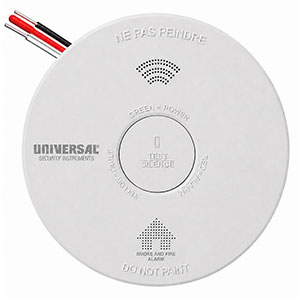
Explore related support articles and resources for this topic.
Browse USI smoke alarm troubleshooting guides for chirping, warning sounds, LED lights, battery changes, power issues, testing, cleaning, and replacement.
Contact options may differ depending on the type of help you need.