Smoke Alarm Troubleshooting
Browse USI smoke alarm troubleshooting guides for chirping, warning sounds, LED lights, battery changes, power issues, testing, cleaning, and replacement.
Related Topics:

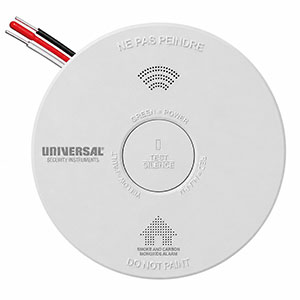

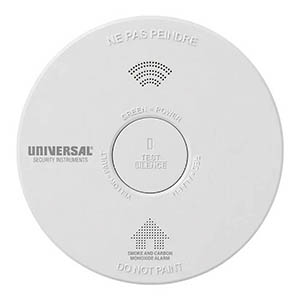
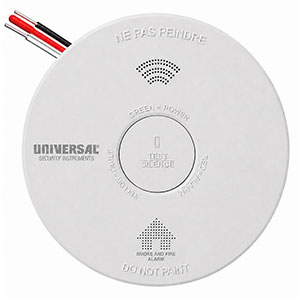


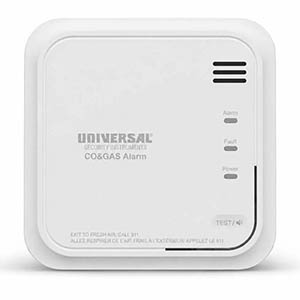
How old is your smoke detector, and how do you know when it's time for a replacement? Even if your Universal Security Instruments (USI) smoke alarm still lights up, passes a test, or has a fresh battery, it may no longer provide the level of protection it was designed to deliver.
Most residential smoke alarms should be replaced every 10 years from their manufacture date, regardless of whether they are battery-powered or hardwired. Some alarms may need replacement sooner because of sensor malfunctions, persistent fault warnings, or depleted sealed batteries.
This guide explains when to replace a USI smoke alarm, how to determine its age, what common end-of-life warnings mean, and how to find an appropriate replacement for your existing detector.
Every 10 years: Replace most residential smoke alarms 10 years after their manufacture date, even if they still pass their regular tests.
Immediately when required: Replace an alarm displaying a confirmed end-of-service-life warning, an unresolved sensor malfunction, or a failed test that cannot be corrected through approved troubleshooting.
Sealed-battery alarms: Replace the entire unit when the non-replaceable battery is depleted or the alarm reaches its specified service life. Do not attempt to replace a sealed internal battery.
Universal Security Instruments recommends replacing smoke alarms approximately every 10 years. The U.S. Fire Administration also recommends replacing residential smoke alarms 10 years after their manufacture date.
As smoke alarms age, dust, grease, environmental exposure, and normal wear can affect their sensing components and overall reliability. Regular cleaning and battery replacement help maintain an alarm, but they do not extend its specified service life.
| Smoke Alarm Type | Typical Replacement Schedule | Important Considerations |
|---|---|---|
| Battery-Operated Smoke Alarms | 10 years from manufacture date | Replace the entire alarm at the end of its service life, even if the battery is still working. |
| Hardwired Smoke Alarms | 10 years from manufacture date | Electrical power and a functioning backup battery do not extend the life of the sensing components. |
| 10-Year Sealed Battery Alarms | 10 years from manufacture date, or sooner when required | Replace the entire unit when the sealed battery is depleted or an end-of-life warning occurs. |
| Combination Smoke & CO Alarms | Follow the specific model's service-life requirements | Replace the entire combination alarm when its specified replacement age or end-of-life condition is reached. |
Always follow the replacement schedule printed on your alarm or stated in its user manual if it specifies an earlier replacement requirement.
One of the easiest ways to determine whether your USI smoke detector needs replacement is to check its manufacture date.
The date is generally printed on a product label located on the back or side of the alarm. Depending on the model, it may be identified as "Manufacture Date," "Date of Manufacture," or similar wording.
Look for a label identifying the Universal Security Instruments model number, electrical specifications, and manufacture date.
Find the date the alarm was manufactured. Do not confuse the manufacture date with the installation date, purchase date, or warranty information.
Example: If your smoke alarm was manufactured in June 2018, its 10-year replacement date would be June 2028, assuming the manufacturer does not specify an earlier date and the alarm has not developed a problem requiring replacement.
Add 10 years to the manufacture date to estimate when the smoke alarm should be replaced.
If the alarm is already 10 years old, replace it. If it is approaching 10 years, plan to install a replacement before the recommended service life expires.
When installing a new smoke alarm, record its manufacture date and recommended replacement date in your household maintenance records. Set a calendar reminder before the alarm turns 10 years old so replacement is not overlooked.
Smoke alarms do not always wait until their 10-year replacement date to develop problems. Some conditions require replacing the unit earlier to maintain reliable protection.
| Warning Sign | What It May Mean | Recommended Action |
|---|---|---|
| 1. Alarm Is 10 Years Old | The smoke detector has reached its recommended service life. | Replace the entire alarm, even if it still responds during testing. |
| 2. End-of-Life Chirping | The alarm is reporting that its service life has ended. | Confirm the warning using the model's manual and replace the unit. |
| 3. Test Button Does Not Work | The alarm may have a battery, power, activation, or internal equipment problem. | Follow approved troubleshooting. Replace the alarm if it continues to fail testing. |
| 4. Sensor Fault Warning | The smoke sensing system may not be functioning correctly. | Follow the model-specific fault instructions and replace the alarm when required. |
| 5. Sealed Battery Is Depleted | The non-replaceable battery can no longer provide the required power. | Replace the entire sealed-battery alarm. |
| 6. Physical or Environmental Damage | Water, impact, paint, excessive contamination, or other damage may affect operation. | Follow manufacturer guidance. Replace a damaged alarm when proper operation cannot be confirmed. |
| 7. Persistent Unexplained Alarms | Contamination, unsuitable placement, or an equipment problem may be responsible. | Rule out an emergency, follow approved troubleshooting, and replace the alarm if the problem cannot be resolved. |
Three loud beeps followed by a pause, repeating continuously are the standard smoke/fire emergency alarm pattern. Evacuate immediately and call 911 from outside.
Occasional short chirps separated by approximately 40 or 60 seconds may indicate a low battery, sensor malfunction, or end-of-life warning. The exact meaning depends on the USI model and may be accompanied by an LED indicator or voice message.
Many Universal Security Instruments smoke alarms include an audible warning to notify homeowners when the alarm needs replacement.
Unlike a temporary low-battery warning, a confirmed end-of-service-life signal means the entire alarm must be replaced. Installing a fresh battery, cleaning the detector, or resetting the warning does not extend its rated service life.
End-of-life warning patterns vary by model, so it is important to identify the exact number of chirps, the time between them, and any accompanying indicator lights.
| USI Model | End-of-Life Warning | Required Action |
|---|---|---|
| USI/SM/10YR | 2 short chirps every 60 seconds | Replace the entire sealed-battery smoke alarm. |
| USI/SM/HWREP | 3 short chirps every 40 seconds | Replace the hardwired smoke alarm. |
| USI/SM/HW10YR/P | Flashing yellow LED associated with an end-of-life condition | Replace the entire alarm. |
| AMI1061SB | 2 short chirps every 60 seconds | Replace the smoke alarm. |
| USI/SMCO/HW10YR/P | Yellow LED flashes twice every 40 seconds with an "End of life" voice announcement | Replace the combination smoke and CO alarm. |
Note: These examples are based on manufacturer documentation for the specified models. Other USI smoke alarms may use different warning patterns. Refer to your exact model's manual before interpreting an intermittent chirp as an end-of-life warning.
Some USI smoke alarms allow an end-of-life warning to be temporarily silenced. This does not restore the alarm's service life or eliminate the need for replacement. Never permanently disconnect an alarm or remove its battery just to stop a warning.
Yes. Hardwired smoke alarms generally require replacement every 10 years, even though they receive continuous electrical power from your home.
The 10-year replacement guideline applies to the smoke alarm itself, not simply its backup battery. As the alarm ages, its sensing components and electronics can become less reliable.
A hardwired smoke alarm may still display a steady green AC power light after reaching its replacement age. However, the green indicator only confirms that electrical power is present on models designed with that feature.
Similarly, an alarm that sounds when tested is not automatically safe to keep using beyond its specified service life.
Hardwired USI smoke alarms may feature replaceable or sealed backup batteries.
No. A 10-year sealed-battery smoke alarm is designed to operate without routine battery replacement during its specified service life. It is not designed to remain in service indefinitely.
For example, USI models such as the USI/SM/10YR and USI/SM/HW10YR/P contain sealed, non-replaceable batteries.
If the internal battery becomes depleted, the alarm reaches its replacement age, or an end-of-life warning occurs, the entire unit must be replaced.
The phrase "10-year battery" describes the intended battery design and service life under specified conditions. It does not guarantee that the alarm will remain operational for exactly 10 years regardless of faults, installation conditions, or environmental exposure.
No. Installing a fresh battery can resolve a low-battery warning on a compatible alarm, but it does not restore aging sensors or extend the smoke detector's original service life.
For example, a smoke alarm manufactured in 2017 should generally be replaced in 2027, even if its removable battery was replaced in 2026.
If several smoke alarms were installed together, they may have similar manufacture dates and reach their recommended replacement age around the same time.
When replacing an expired detector, check the age and operating condition of the other smoke alarms in your home.
You do not necessarily need to replace every alarm because one detector has failed. However, replacing part of an interconnected system requires confirming compatibility with the remaining units.
When your smoke detector reaches the end of its service life, selecting an appropriate replacement involves more than matching the physical shape of the existing alarm.
Locate the USI model number printed on your current smoke detector. Older products may use model numbers such as USI-1204, USI-1208, USI-5204, or USI-5304.
The model number can help you find the correct documentation and determine which replacement products may be suitable.
Determine whether your existing alarm is battery-powered, hardwired, or hardwired with battery backup.
Do not replace a required hardwired smoke alarm with a standalone battery-operated unit unless the installation is specifically permitted by applicable codes and the authority having jurisdiction.
For hardwired interconnected smoke alarms, confirm that the replacement is approved to communicate with the existing alarms.
Different USI product generations may use different connectors, mounting brackets, and interconnect requirements. A replacement model may require changes to the mounting hardware or electrical connector.
Always follow the manufacturer's compatibility guidance and have electrical installation work performed by a qualified professional when appropriate.
Universal Security Instruments provides updated smoke alarm models with options such as sealed 10-year batteries, hardwired operation, and combination smoke and carbon monoxide detection.
Consult the USI Product Model Transition Chart to identify current model families associated with selected previous-generation alarms.
Important: A manufacturer model transition listing does not automatically confirm that the new alarm uses the same mounting bracket, wiring connector, or interconnect configuration. Verify these details before purchasing or installing a replacement.
Check the manufacture date printed on the alarm label. Most residential smoke alarms should be replaced after 10 years. Some USI models also produce end-of-service-life chirps, flashing LEDs, or voice announcements indicating that replacement is required.
Yes. A smoke alarm that passes a test is not automatically reliable beyond its specified service life. USI and the U.S. Fire Administration recommend replacing residential smoke alarms at approximately 10 years from their manufacture date.
Check the product label, usually located on the back or side of the alarm. Many models display a manufacture date rather than a printed expiration date. Add 10 years to the manufacture date, unless the manufacturer specifies an earlier replacement requirement.
Check the alarm label, original packaging, installation records, or user manual. If you cannot establish the alarm's age and it may be approaching or beyond its recommended service life, replacing it is the safer option.
Yes. Hardwired smoke alarms generally need replacement every 10 years. Receiving electrical power does not prevent the alarm's sensing components from aging. A green power light does not mean the smoke detector can be used indefinitely.
An end-of-life chirp indicates that the smoke alarm has reached a condition requiring complete replacement. Warning patterns differ by model. For example, the USI/SM/10YR uses two chirps every 60 seconds, while the USI/SM/HWREP uses three chirps every 40 seconds to indicate end of service life.
You can replace the battery on models designed with user-replaceable batteries when the warning is specifically caused by a low battery. However, a depleted sealed battery, end-of-life warning, unresolved sensor fault, or expired alarm requires replacing the entire unit.
Yes, provided the replacement meets the applicable installation requirements. For hardwired and interconnected alarms, verify mounting, electrical connector, and interconnect compatibility. An updated model number does not necessarily mean the replacement is a direct plug-in match.
Need help determining whether your smoke alarm should be replaced? These resources can help you identify warning sounds, locate your model number, and review replacement information.
If your smoke alarm has reached its 10-year replacement age, displays a confirmed end-of-life warning, or has an unresolved malfunction, explore available Universal Security Instruments smoke and fire alarms. Choose a model that meets your home's electrical, installation, and interconnection requirements.
Explore related support articles and resources for this topic.
Browse USI smoke alarm troubleshooting guides for chirping, warning sounds, LED lights, battery changes, power issues, testing, cleaning, and replacement.
Contact options may differ depending on the type of help you need.