CO/Gas Alarm Troubleshooting
Find USI carbon monoxide and natural gas alarm troubleshooting guides for beeping, warning lights, error codes, replacement, and model-specific support.
Related Topics:



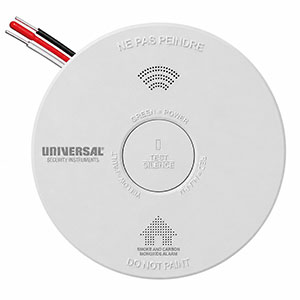
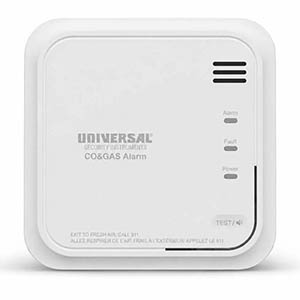



Is your combination carbon monoxide and natural gas alarm beeping, displaying an unfamiliar warning light, failing a test, or reporting a malfunction? Combination alarms monitor two different household hazards, and understanding how they operate is important when identifying potential problems.
This Combination CO & Natural Gas Alarm Support Guide focuses on newer Universal Security Instruments (USI) dual-hazard detectors, particularly the USI/NGCO/10YR 10-Year Battery Natural Gas and Carbon Monoxide Alarm.
Use the sections below to learn about common operating problems, alarm testing, battery and sensor warnings, installation considerations, and when the entire detector needs to be replaced.
Natural gas emergency: If your detector signals a natural gas leak or you smell gas, evacuate immediately. Do not operate electrical switches, appliances, or other equipment that could produce a spark. Do not use a phone inside the affected building.
Carbon monoxide emergency: If your detector signals dangerous carbon monoxide levels, move everyone outside into fresh air immediately. Carbon monoxide is invisible and odorless and may cause headache, dizziness, nausea, confusion, or loss of consciousness.
Get help from outside: Call 911 from a safe location. For a suspected natural gas leak, also notify your gas utility. Do not reenter the building until emergency responders or the appropriate utility have confirmed it is safe.
Combination carbon monoxide and natural gas detectors contain separate sensing technologies to monitor two different hazards.
The USI/NGCO/10YR uses an electrochemical sensor for carbon monoxide detection and a MEMS sensor for methane detection.
When the detector identifies a hazardous condition, it activates its audible warning and corresponding visual indication. The two hazards have different emergency response considerations, making it important to follow the instructions for the specific warning.
No. The USI/NGCO/10YR detects carbon monoxide and natural gas, but it is not a smoke or fire alarm.
Homes still need properly installed smoke alarms in the locations required by applicable safety codes.
Similarly, combination smoke and CO alarms are not automatically capable of detecting natural gas. Always check the product specifications to confirm which hazards an alarm is designed to monitor.
The USI/NGCO/10YR is a newer combination natural gas and carbon monoxide detector designed for residential use.
| Feature | USI/NGCO/10YR | Troubleshooting Consideration |
|---|---|---|
| Alarm Type | Carbon monoxide and natural gas | Both hazards must be considered when investigating an active alarm. |
| CO Sensor | Electrochemical | Monitors carbon monoxide concentrations. |
| Natural Gas Sensor | MEMS | Monitors methane associated with natural gas leaks. |
| Power Source | Sealed 10-year lithium battery | No routine battery replacement or household AC connection is required. |
| Audible Warning | 85 dB alarm | Follow the manufacturer's instructions to identify the warning pattern. |
| Visual Indicators | LED status indicators | Interpret each indicator using the exact product instructions. |
| Test / Reset | Built-in Test/Reset function | Use the manufacturer-approved procedure for testing or resetting. |
| Interconnection | Not supported | Does not communicate alarm signals to a hardwired or wireless interconnected alarm network. |
| End-of-Life Warning | Supported | Replace the entire alarm when its specified service life ends. |
Important: The USI/NGCO/10YR is a standalone battery-powered alarm. Its sealed battery is the primary power source, not a backup for household electrical power.
Several conditions can affect a combination alarm, including installation issues, equipment faults, expired batteries, and environmental conditions.
The following chart provides general guidance for the USI/NGCO/10YR and similar dual-hazard detectors. The exact warning indicators and recommended procedures should always be verified using the manual for your specific model.
| Problem | Possible Explanation | Recommended Action |
|---|---|---|
| Alarm Sounds Repeatedly | Potential natural gas or carbon monoxide detection. | Evacuate immediately and contact emergency services. Do not assume a false alarm. |
| Alarm Sounds and Then Stops | Gas concentrations may have changed or the alarm condition may no longer be active. | Remain outside and have the potential hazard evaluated before reentering. |
| Occasional Chirping | Possible battery, sensor, fault, or end-of-service-life notification. | Identify the warning using the exact model's instructions. Replace the alarm when required. |
| Unexpected LED Warning | Possible alarm memory, equipment status, or fault notification. | Compare the light pattern with the manufacturer's indicator chart. |
| Test Button Does Not Respond | Incomplete activation, equipment problem, or incorrect test procedure. | Verify the model's activation and testing instructions. Replace a unit that continues to fail testing. |
| Battery Warning on Sealed Model | Internal battery may be depleted or malfunctioning. | Do not open the sealed housing. Follow manufacturer instructions for replacement or support. |
| Repeated Fault Warning | Possible internal sensing or electronic malfunction. | Follow approved troubleshooting and replace the alarm if the problem remains. |
| Alarm Reaches End of Life | Specified operating life has ended. | Replace the entire alarm rather than attempting a battery change or reset. |
Combination gas detectors can produce different warning sounds depending on whether they detect a hazard or need maintenance.
Generally, an active gas or carbon monoxide alarm produces a loud repeating warning, while some equipment conditions are identified by occasional maintenance chirps.
However, the exact number of beeps, timing between sounds, and accompanying LED pattern are model-specific.
If your detector signals natural gas, immediately leave the building. Do not operate electrical equipment, investigate the leak, or attempt to silence the detector while a gas hazard may be present.
From a safe outdoor location, contact emergency services and your natural gas utility.
Many residential carbon monoxide detectors use four loud beeps followed by a pause, repeating, to indicate a CO emergency.
If your combination detector signals carbon monoxide, evacuate to fresh air and call 911. Do not wait for symptoms or attempt to locate the CO source before leaving.
The exact audible distinction between natural gas and CO on the USI/NGCO/10YR should be verified against that model's operating instructions.
Occasional chirping may indicate an equipment condition such as a depleted battery, sensor fault, or end-of-service-life warning.
Unlike older plug-in USI combination alarms, newer sealed-battery models do not necessarily use the same chirp intervals or warning codes.
Do not interpret a USI/NGCO/10YR maintenance warning using the older MCN400 or MCND401 beep-code charts.
For a confirmed maintenance notification in a safe environment, note the number of chirps, time between sounds, and any flashing indicator. These details can help manufacturer support identify the warning. Never remain inside to record an active or unexplained gas or CO emergency alarm.
Regular testing helps verify that the alarm's warning horn and electronic test functions are operating as intended.
The USI/NGCO/10YR includes a built-in Test/Reset function. Follow the manufacturer's test-button instructions for the exact duration and expected response.
Confirm that the alarm was installed and activated according to its product instructions.
Some sealed-battery safety alarms require an activation step before normal operation begins. Check your model's instructions for any applicable activation tab, switch, or mounting requirement.
Do not open the sealed battery housing or attempt to access internal components.
Notify other household members before testing because the alarm horn is loud.
Press the Test/Reset control according to the manufacturer's instructions and listen for the expected audible test response.
Check the accompanying visual indicators described in the product manual.
If the alarm fails to respond, review any visible status or fault indication.
A model that reports an unresolved internal malfunction or has reached its specified service life may require complete replacement.
If the alarm still does not pass its required test after the manufacturer-approved checks, do not rely on it for protection.
Contact manufacturer support or replace the detector as directed.
The built-in test function verifies the operation specified by the manufacturer, including applicable warning electronics and audible outputs.
However, pressing a test button does not necessarily verify the accuracy of each gas sensor under actual exposure conditions. Never release natural gas, use vehicle exhaust, or create hazardous conditions to test the detector. Use only manufacturer-approved testing methods.
Repeated alarm activations may be caused by a genuine hazard, environmental conditions, improper installation, or an equipment problem.
Never assume the alarm is malfunctioning simply because no gas odor is present.
Malfunctioning furnaces, water heaters, fireplaces, generators, and other fuel-burning equipment can produce dangerous carbon monoxide levels.
Carbon monoxide cannot be detected by smell. If a CO emergency alarm sounds, evacuate even if there is no visible smoke or unusual odor.
A leaking gas line, appliance connection, or gas-burning appliance may release methane into the surrounding area.
Natural gas supplied to homes typically contains an added odorant that produces a distinctive rotten-egg smell. However, odor is not a reliable substitute for a properly functioning natural gas detector.
If the detector signals natural gas or a leak is suspected, leave immediately and contact the gas utility from outside.
Some detectors may be affected by unsuitable placement, airborne contaminants, extreme environmental conditions, or other installation-related issues.
After a hazardous condition has been ruled out by appropriate personnel, review the alarm's placement and environmental restrictions.
Do not relocate or disconnect the alarm while an active warning is occurring.
An alarm that repeatedly reports an internal fault may have a sensing or electronic problem requiring manufacturer service or replacement.
Resetting the alarm does not necessarily correct the condition. If the fault persists after approved troubleshooting, replace the detector when instructed.
Correct placement is especially important for a detector that monitors both natural gas and carbon monoxide.
Natural gas is primarily methane, which is lighter than air and generally rises when released. Carbon monoxide behaves differently and can spread throughout occupied indoor spaces.
For this reason, do not assume that installation advice for a CO-only plug-in alarm is appropriate for a combined natural gas and CO detector.
USI describes the USI/NGCO/10YR as a wall-mounted alarm. Follow the manufacturer's placement instructions and applicable local code requirements for the exact installation height and distance from appliances.
If you are uncertain about the correct location for a dual-hazard alarm, consult the official product instructions or a qualified installer rather than applying placement rules intended for a different alarm type.
The USI/NGCO/10YR uses an internal sealed lithium battery designed to provide power throughout its specified 10-year service life.
Unlike a plug-in carbon monoxide detector, this model does not require a household electrical outlet. It also does not contain a user-replaceable backup battery.
No. The USI/NGCO/10YR contains a sealed, embedded lithium battery that is not intended for homeowner replacement.
If the internal battery is depleted or the alarm reports an end-of-service-life condition, follow the manufacturer instructions for replacing the entire detector.
Do not open, puncture, recharge, or modify the sealed battery housing.
Yes. The USI/NGCO/10YR is designed to operate from its own internal battery rather than household AC electricity.
A power outage does not require switching the alarm to a separate backup power source.
However, the alarm must still be properly activated, within its rated service life, and free of unresolved faults.
Although the battery is designed for a 10-year service life, individual equipment problems can still occur.
If the detector reports an internal battery fault or fails testing before its expected replacement age, contact USI product support for warranty or replacement guidance.
The USI/NGCO/10YR carries a 10-year limited manufacturer's warranty. Warranty eligibility and coverage are subject to the manufacturer's terms.
The USI/NGCO/10YR includes manufacturer-described Auto Silence and Test/Reset features.
However, these functions are not intended to replace the appropriate emergency response when natural gas or carbon monoxide is detected.
Never press Silence or Reset to dismiss an unexplained or active emergency warning.
After a hazardous condition has been investigated and the area is confirmed safe, follow the product's instructions for any applicable reset or maintenance procedure.
A reset cannot repair a faulty sensor, restore a depleted sealed battery, or extend the alarm's rated service life.
No. The USI/NGCO/10YR is listed by the manufacturer as a standalone alarm without interconnection capability.
This means it does not automatically transmit an alarm signal to other hardwired or wireless interconnected detectors in the home.
It also cannot be treated as a direct wired replacement for every older USI combination alarm.
When replacing a legacy hardwired detector, verify that the new alarm configuration satisfies the required power source, interconnection, and hazard-detection requirements.
Older USI models such as the MCN108, MICN109, and MDSCN111 may have hardwired electrical connections and additional smoke detection or interconnection capabilities. The battery-powered USI/NGCO/10YR does not automatically replace those installation features. Review the original system requirements before changing alarm types.
Routine maintenance helps identify equipment problems before they interfere with the alarm's operation.
Even sealed 10-year battery detectors require periodic testing and inspection according to the manufacturer.
| Maintenance Task | When to Perform It | Recommended Action |
|---|---|---|
| Test the Alarm | According to the product manual; USI's store recommends weekly testing | Use the built-in Test/Reset function and verify the prescribed test response. |
| Inspect the Housing | During routine maintenance | Check for physical damage, blocked sensing openings, and unusual contamination. |
| Clean Accessible Surfaces | As specified by the manufacturer | Use only the approved cleaning method. Do not spray chemicals or liquids into the sensing openings. |
| Check Status Indicators | During routine inspections | Verify that the displayed pattern matches the model's normal operating instructions. |
| Check Battery and Service Life | At least annually and whenever a warning appears | Review the alarm's age, replacement information, and any fault notifications. |
| Replace the Alarm | At its specified replacement age or sooner when required | Replace the entire detector if it reaches end of life, develops an unresolved fault, or cannot pass testing. |
Never use an open gas source, smoke, solvents, or aerosol chemicals to test or clean the sensing components unless a specific manufacturer-approved procedure expressly permits the method.
Combination alarms have a limited operating life because their sensing components and power systems can deteriorate over time.
The USI/NGCO/10YR is designed with a sealed 10-year battery and includes manufacturer-described end-of-service-life and fault indicators.
Replace the alarm when:
Do not attempt to extend the alarm's service life by opening its sealed battery compartment, modifying its electronics, or repeatedly resetting a fault warning.
No. A sealed 10-year battery eliminates routine battery replacement, but the detector still requires the testing, cleaning, inspection, and replacement procedures described by the manufacturer.
The entire unit must be replaced when its rated service life ends or an unresolved condition makes it unreliable.
The alarm may be reporting a natural gas or carbon monoxide emergency, an equipment fault, or an end-of-service-life condition. If it sounds an active or unexplained emergency warning, evacuate immediately. Once the area is safe, use the exact product instructions to identify any maintenance warning.
Yes. The USI/NGCO/10YR includes an electrochemical carbon monoxide sensor and a MEMS methane sensor. It is designed to detect both hazards, but it does not detect smoke or fire.
Use the built-in Test/Reset function according to the manufacturer's instructions. Verify the expected audible and visual responses. Never release natural gas or use vehicle exhaust to test either sensing system.
The alarm may still be detecting a hazardous condition or reporting an unresolved problem. Do not repeatedly silence an active or unexplained warning. Evacuate, contact emergency services, and have the potential hazard evaluated.
No. This model uses a sealed, non-replaceable lithium battery. When the battery is depleted or the alarm reaches a condition requiring replacement, the entire detector must be replaced.
No. It operates using its internal sealed battery and does not require a household AC electrical connection. It can continue operating during a power outage, provided the battery and alarm are functioning correctly.
No. The manufacturer lists the USI/NGCO/10YR as a standalone detector without interconnection capability. It does not automatically communicate with a hardwired or wireless interconnected alarm system.
Not unless the manufacturer specifically identifies propane detection as a supported function. The USI/NGCO/10YR is specified for carbon monoxide and natural gas (methane). Do not rely on it as a propane detector without explicit manufacturer authorization.
Yes. The absence of a noticeable odor does not establish that a building is safe. If your natural gas detector sounds an emergency warning, evacuate and contact the gas utility or emergency services rather than relying on your sense of smell.
The USI/NGCO/10YR provides both natural gas and carbon monoxide detection and may be an option for some installations. However, it is battery-powered rather than plug-in and has different features. Verify the installation and power requirements before replacing your existing detector.
For more information about audible warnings, LED indicators, replacement requirements, and specific USI alarm models, explore these resources.
The USI/NGCO/10YR provides natural gas and carbon monoxide detection using an electrochemical CO sensor, MEMS methane sensing technology, and a sealed 10-year battery. It also features an 85 dB audible warning, visual indicators, and a built-in Test/Reset function.
If your existing alarm is expired, has an unresolved malfunction, or no longer passes its required test, review the USI/NGCO/10YR and confirm that its installation requirements meet your home's needs.
Explore related support articles and resources for this topic.
Find USI carbon monoxide and natural gas alarm troubleshooting guides for beeping, warning lights, error codes, replacement, and model-specific support.
Contact options may differ depending on the type of help you need.