CO/Gas Alarm Troubleshooting
Find USI carbon monoxide and natural gas alarm troubleshooting guides for beeping, warning lights, error codes, replacement, and model-specific support.
Related Topics:


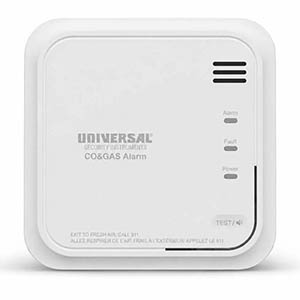
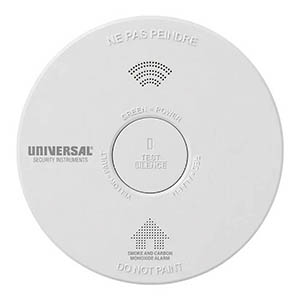


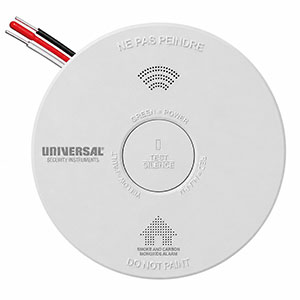

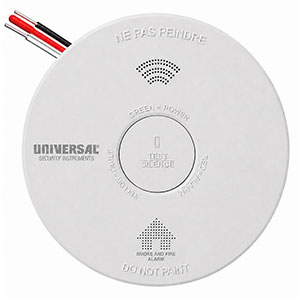
Is your Universal Security Instruments (USI) natural gas alarm beeping, displaying an unfamiliar warning light, or reporting a fault? Natural gas and combination carbon monoxide alarms use audible warnings and visual indicators to communicate possible hazards, operating conditions, and maintenance problems.
Understanding USI natural gas alarm beeping and LED light meanings can help you recognize important warnings. However, alarm patterns differ between product generations, and not every carbon monoxide detector is capable of detecting natural gas.
Natural gas warning: If your natural gas alarm sounds or you suspect a gas leak, evacuate immediately. Do not operate electrical switches, appliances, thermostats, or anything that could create a spark. Call 911 and your gas utility from a safe location outside.
Carbon monoxide warning: If your CO alarm sounds an emergency warning, move everyone outside into fresh air and call 911. Carbon monoxide is invisible and odorless.
Never ignore an active alarm: Do not assume an unfamiliar alarm sound is a malfunction. Do not return to the building until emergency responders or the appropriate utility confirm that it is safe.
Universal Security Instruments offers different types of gas detection products. Some detect both natural gas and carbon monoxide, while others are designed exclusively for carbon monoxide monitoring.
| USI Model | Detection Capabilities | Power Source | Important Features |
|---|---|---|---|
| USI/NGCO/10YR | Natural Gas (Methane) & Carbon Monoxide | 10-year sealed lithium battery | Dual-sensor protection, 85 dB audible warning, visual status indicators, Test/Reset function, and end-of-life alerts. |
| USI/CO/REP | Carbon Monoxide Only | 2 replaceable AA alkaline batteries | Digital LCD display, green/yellow/red status indicators, low-battery warnings, and fault notifications. |
| USI/CO/PLUG | Carbon Monoxide Only | 120V plug-in power with 2 AA backup batteries | Digital LCD display, three-color status indicators, battery backup, and CO alarm memory. |
Important: The USI/CO/REP and USI/CO/PLUG do not detect natural gas or methane. If natural gas detection is required, choose a model specifically designed to monitor methane, such as the USI/NGCO/10YR.
The USI/NGCO/10YR is a newer combination alarm designed to monitor both natural gas leaks and dangerous carbon monoxide concentrations.
This model uses two sensing technologies:
When the USI/NGCO/10YR detects natural gas at its specified alarm threshold, it activates an audible warning and visual indication.
If the natural gas warning activates, immediately leave the building. Do not attempt to locate the leak, operate electrical equipment, or reset the detector while a gas hazard may be present.
Call emergency services and your natural gas utility from outside. The exact audible and visual warning sequence should be confirmed using the instruction manual for the USI/NGCO/10YR.
The USI/NGCO/10YR also monitors for carbon monoxide using a dedicated electrochemical sensor.
If the alarm indicates a carbon monoxide emergency, evacuate to fresh air immediately and contact emergency services.
Standard residential CO alarms commonly use four repeating beeps to identify a carbon monoxide emergency. Always use the specific USI/NGCO/10YR instructions to distinguish its CO warning from its natural gas warning.
The USI/NGCO/10YR includes equipment-status and end-of-service-life alerts.
Because this model uses a sealed, non-replaceable lithium battery, a depleted internal battery or confirmed end-of-service-life condition requires replacing the entire alarm.
A sealed 10-year battery eliminates routine battery replacement, but it does not eliminate the need for alarm testing, cleaning, or service-life monitoring. Never attempt to open the housing or replace the internal battery of the USI/NGCO/10YR.
The newer USI/CO/REP and USI/CO/PLUG carbon monoxide alarms use three-color LED indicators to communicate their operating status.
Although these models do not detect natural gas, their warning lights are important for homeowners using separate CO and natural gas detection devices.
| LED Color | Common Meaning | What to Do |
|---|---|---|
| Green LED | Power or normal operating status. | Compare the indicator pattern with the model's normal standby instructions. |
| Yellow LED | Low battery, equipment malfunction, or end-of-service-life condition. | Count any accompanying chirps and refer to the troubleshooting guide. |
| Red LED | Carbon monoxide alarm condition. | If the CO emergency warning is sounding, evacuate immediately. |
The exact flashing interval and audible pattern provide additional information. A yellow warning light alone does not identify whether the alarm needs new batteries or complete replacement.
Both models monitor carbon monoxide rather than natural gas. Their maintenance chirps can help identify battery and service problems.
| Model | Warning Pattern | Meaning | Recommended Action |
|---|---|---|---|
| USI/CO/REP | 1 chirp every 40 seconds | Low battery | Replace the approved AA batteries. |
| USI/CO/REP | 2 chirps every 40 seconds | Malfunction warning | Follow fault instructions and replace the alarm if required. |
| USI/CO/REP | 3 chirps every 40 seconds | End of service life | Replace the entire alarm. |
| USI/CO/PLUG | Low-battery chirp approximately every 40 seconds | Backup battery warning | Install fresh approved AA backup batteries. |
| USI/CO/PLUG | 3 chirps every 40 seconds | End of service life | Replace the entire alarm. |
Note: These are carbon monoxide alarm warning patterns, not natural gas detection signals. For a detailed explanation of emergency CO beeps, maintenance chirps, and model-specific faults, see our USI Carbon Monoxide Alarm Beep Codes Explained guide.
If your alarm is making an unfamiliar sound or displaying a warning indicator, determine whether it is an active emergency alarm or an occasional maintenance notification.
Older Universal Security Instruments combination alarms, including the MCN400, MCN400B, MCND401, and MCND401B, use different warning indicators from newer products.
These legacy models are being phased out, but homeowners may still have them installed. The following chart is provided as a reference for customers troubleshooting an existing detector.
| Legacy Alarm Pattern | Meaning | Recommended Action |
|---|---|---|
| 1 repeating beep with blue LED flashing | Natural gas emergency warning. | Evacuate immediately and contact emergency services and your gas utility. |
| 4 repeating beeps with red LED flashing | Carbon monoxide emergency warning. | Evacuate to fresh air and call 911. |
| Blue LED flashes about every 5 seconds without beeping | Stored natural gas alarm indication on supported models. | Have the potential hazard evaluated before clearing alarm memory. |
| Green LED stays illuminated and briefly turns off | Normal AC-powered operation on supported legacy models. | No action necessary if it matches the manual. |
| 1 short chirp approximately every 40 seconds | Low backup battery. | Verify and replace the approved battery. |
| 3 short chirps approximately every 40 seconds | Trouble or service warning. | Follow the model's instructions; replacement may be required. |
| 2 short chirps approximately every 20 seconds | End-of-service-life warning. | Replace the entire detector. |
Important: These warning patterns apply to the specified legacy alarm families. Not every older USI alarm uses the same intervals. For example, hardwired models and other production generations may have different signal patterns.
On supported MCN400 and MCND401 models, a flashing blue LED identifies a natural gas-related warning.
If the blue light flashes with a repeating audible alarm, treat it as an emergency. If it flashes approximately every five seconds without sound, it may indicate that a natural gas event was detected previously and stored in memory.
Do not reset or clear a stored gas warning until the potential hazard has been evaluated and the building has been confirmed safe.
The USI/NGCO/10YR uses audible and visual indicators to report detected hazards and equipment conditions. Because it monitors both natural gas and carbon monoxide, consult its exact product instructions to distinguish gas warnings, CO alarms, faults, and end-of-life notifications. Do not use the LED chart for discontinued MCN400 or MCND401 models to interpret this newer alarm.
No. The USI/CO/REP is a battery-powered carbon monoxide detector. It uses an electrochemical sensor to detect CO, not methane or natural gas. For natural gas protection, use a detector specifically designed for that hazard.
No. The USI/CO/PLUG is a plug-in carbon monoxide alarm with replaceable backup batteries. Despite its plug-in design, it does not monitor methane or natural gas.
On older MCN400 and MCND401 combination alarms, a blue LED identifies natural gas-related warnings. Flashing with repeated beeps can indicate an active gas alarm, while a silent flash approximately every five seconds can indicate stored alarm memory. These legacy patterns do not necessarily apply to newer USI models.
No. The USI/NGCO/10YR uses a sealed, non-replaceable lithium battery. If the alarm reaches the end of its service life or develops a condition requiring replacement, the entire detector must be replaced.
A natural gas alarm that stops sounding does not establish that the building is safe. Gas concentrations can change, and some alarms retain previous warning information. Evacuate and contact emergency services or your natural gas utility. Do not reenter until the area has been confirmed safe.
No. Never intentionally release natural gas or create a gas leak to test a detector. Use the manufacturer's built-in TEST function according to the product instructions.
For additional troubleshooting, replacement information, or official product instructions, visit the following resources.
The USI/NGCO/10YR combines natural gas (methane) and carbon monoxide detection with a sealed 10-year battery, audible alerts, and visual status indicators. If your older combination alarm is being discontinued or has reached its service life, review this current model and its installation requirements before purchasing.

Explore related support articles and resources for this topic.
Find USI carbon monoxide and natural gas alarm troubleshooting guides for beeping, warning lights, error codes, replacement, and model-specific support.
Contact options may differ depending on the type of help you need.